Friday, February 28, 2014

2-for-1 Crock Pot Recipes for Cuban Beef Stew

Cuban beef & potato stew
I grew up enjoying this kind of stew, called Carne con Papas in Spanish, lovingly cooked by my Cuban mother on the stove. I've adapted her traditional recipe to come up with a version for the crock pot or slow cooker. My crock pot Cuban beef stew has become one of my husband's favorite cold-weather suppers, and it's also received glowing praise (and requests for seconds & leftovers) from friends who have joined us for dinner.

I hope you and your family will give this a try, as well as the variation which uses Calabaza (West Indian pumpkin, similar to hubbard squash) and hot peppers for a slightly spicier but not too hot stew.  You can make the calabaza version without the hot peppers & spices if you prefer, using bell pepper and ground black pepper as in the original recipe.

I'm currently mulling over yet another variation for this recipe, using smoked paprika and a little bit of chipotle powder or chipotle paste, or possibly some dried chilies in place of the regular paprika and fresh peppers. If you try your hand at a version of this beef stew with those smoky ingredients, please do leave a comment below to let us know how it turned out.

Ingredients
4 large potatoes, cut into 2" chunks (I prefer unpeeled but you can peel)
2 1/2 to 3 lbs beef stew meat*
2 Tbs olive oil (preferably Spanish olive oil)
1 onion, finely chopped
1 large bell pepper, finely chopped
6 large garlic cloves, minced
2 large (or 3 small) dried bay leaves
1 Tbs paprika
2 tsp Kosher or sea salt
1 tsp dried oregano
1/4 tsp ground black pepper
1 can (14.5 oz) diced tomatoes, undrained
1 cup dry sherry**
1 cup water or beef stock
1/3 cup Spanish capers packed in brine, drained
Generous 1/4 cup chopped parsley, plus more for garnish
1/2 cup frozen peas (no need to thaw), plus a little more (thawed) for garnish

Carne con papas
*I've also used venison, with just as good results. The meat should be cut into approx. 1" to 1 1/2" cubes. To save time, I usually don't brown the meat before adding to the crock pot, but you can certainly do so in the same pan you sauteed the vegetables.

**Please don't use "cooking sherry." If it's not good enough to drink, you shouldn't cook with it. You'll get much better flavor in recipes if you use even a low-end dry sherry instead of the swill that's passed off as "cooking sherry."

Heat the olive oil & bay leaves in a large saucepan over medium heat. Add onion, peppers & garlic and saute until softened. While that's cooking, you can chop the potatoes and place in crock pot, followed by the stew meat unless you're going to brown the meat first. If you're going to brown the meat, add to saucepan as soon as the vegetables have softened and quickly brown the meat on all sides (you may want to raise the heat to medium high for a quick sear).

Add meat and sauteed vegetables to crock pot, followed by the paprika, salt, ground pepper, tomatoes, sherry and water or stock. Gently stir if needed, then turn crock pot to High and cook until meat & potatoes are tender, about 5 to 6 hours, stirring only once or twice at most (I generally wait until the stew has cooked on High for at least 3 hours before stirring). When you have about 30 minutes to an hour of cooking time left, stir in the capers, parsley and peas (except the portions reserved for garnishing), then cover and continue to cook until done. Note: You can also cook this on Low simply by doubling the cooking time but still adding the final 3 ingredients towards the very end. Serve in bowls and top with a little chopped parsley and a sprinkling of peas. Makes about 8 hearty servings, and tastes even better when reheated the next day (store leftovers in refrigerator). This stew also freezes well.

Carne con calabaza
Spicier Variation with Calabaza (Caribbean/West Indian pumpkin):
Substitute an equal amount of peeled & cubed Calabaza or Hubbard squash for the potatoes
Substitute 2 Cubanelle peppers & 1 Poblano pepper for the bell pepper
Substitute hot paprika for the mild paprika
Substitute cayenne powder for the black pepper

Using calabaza or Hubbard squash instead of potatoes adds a subtle, mellow sweetness to the stew, and the deep orange hue of the squash adds appealing color. Follow the same cooking instructions as for the original recipe above. Makes the same amount of stew, and also freezes well.

Zestfully yours,
Gloria
Carolina Sauce Company


Thursday, February 27, 2014

Best-Selling Smoker Woods & BBQ Grill Accessories for 2013

Onward Grill Pro 00200 Mesquite Wood ChipsThe calendar might still say winter and the thermometer reading may be hovering around freezing, but that doesn't stop hard-core BBQ enthusiasts from firing up their grills and barbecue smokers. For those of you who aren't cooking outdoors until the weather warms up, now is the time to check on the condition of your grilling & BBQ tools and accessories, and to stock up on wood chips, grilling planks and other supplies you'll need for barbecue season.

Before you spend any money, however, I recommend you start by checking out the top 5 best-selling grill accessories and smoker supplies for 2013 at the Carolina Sauce Company:

1. Grill Pro Mesquite Wood Chips are properly aged chips of genuine mesquite wood, the smoker wood of choice when you want to give your smoked brisket, beef ribs, chicken or other meats that authentic, robust southwestern flavor. When only Texas style barbecue will do, or when you want to experience the "big daddy" of smoked flavor, choose mesquite! Mesquite chips are also great for grilling hamburgers, lamb, pork and even venison - just be careful not to overdo it with milder meats and poultry, because mesquite smoke is strong stuff. Grill Pro Mesquite Chips come in resealable bags holding 170 cubic inches of real mesquite wood chips.

2. Grill Pro Cherry Smoker Chips will infuse your meats and poultry with delightfully bright, fruity notes of real cherry wood. Fruit woods like cherry are often the pro's choice with venison and other game meats, and cherry wood chips also add wonderfully mellow, medium-smoke flavor to pork loin, ribs, chicken, lamb and anything else you choose to grill or smoke. As with the mesquite wood chips, Grill Pro Cherry Wood Chips come in resealable bags holding 170 cubic inches of real cherry wood.

Nature's Cuisine NC010 14 x 5.5 Cedar, Alder, Maple, & Hickory Grilling Planks, 4 Count
3. Assorted Grilling Planks 4-Pack: Plank grilling is a simple and convenient way to add subtle wood flavor to fish and seafood, chicken, leaner meats, and vegetables. Very popular in the Pacific Northwest (e.g., cedar plank grilled salmon), cooking on wood planks is catching on throughout the country as a healthier cooking method (you use less oil or fat) -- which no doubt explains why this four-pack of assorted wooden planks for grilling was our 3rd-best selling BBQ accessory. The pack comes with four 14" x 5.5" planks, one each of Cedar, Alder, Maple & Hickory, plus instructions and recipes.

4. Smokehouse Alder Grilling Planks:  Grilling on a plank of alder wood imparts your food with a magnificent combination of robust but not overpowering smoke flavor plus light and mellow notes of vanilla that add a subtle natural sweetness. These planks are made from 100% natural Pacific Northwest Alder wood, which is hard to find in other parts of the country. Alder wood is ideal for poultry and game birds, pork (leaner cuts like loin), vegetables and fish.

GrillGrates
5. GrillGrates are an award-winning, raised-ridge, nonstick interlocking grilling surface that fits on virtually any grill for picture-perfect, tastebud-tantalizing grilled food every time. GrillGrates amplify any heat source to facilitate infrared grilling, block flare-ups while retaining juices, even out grilling temperatures to prevent hot spots, and give you those attractive sear marks that are otherwise elusive for most grillers except the pros. They make an ideal Father's Day gift or any other occasion gift for anyone who loves to cook on their BBQ grill. Find the right GrillGrate for your grill when you click here.

Zestfully yours,
Gloria


Wednesday, February 26, 2014

My Very First Brown Stock (and Most Definitely NOT My Last)

Beef stock recipe
Making stock is one of my favorite ways to spend a rainy Saturday indoors. I've made my own poultry stock for years, freezing "picked" chicken & turkey carcasses along with uncooked necks & wings & backs until I had at least 2 to 3 pounds' worth of bones and parts, then spending the better part of the day simmering them with vegetables, herbs & spices until reduced to liquid gold, then measuring into 2-cup & 1-quart containers for the freezer, to be used in recipes over the following weeks.

Despite my experience with poultry stock, I had never made beef stock or broth -- much less a true brown stock made from oven-roasted meaty beef bones -- until recently. I had several excuses, including a lack of beef bones and a fear of roasting the raw, meaty bones without charring them. Buying half a cow earlier this year eliminated my first excuse, as there were two parcels labeled "soup bones" among the many packets of meat we received from the butcher. Having recently depleted my stash of frozen chicken stock and lacking poultry bones in the freezer, I decided to take the plunge and make brown stock from the beef bones. Thankfully, my fear of over-roasting proved to be unfounded and the resulting brown stock was a smashing success, albeit a two-day process.

I began by reading about brown stock in one of my favorite cookbooks, received as a wedding present over 25 years ago and still one of my go-to references in the kitchen: Rodale's Basic Natural Foods Cookbook. The following recipe is my adaptation of the Basic Brown Stock recipe found on page 110 of that book. The main difference is that I used only beef bones, rather than a combination of beef bones, veal shanks and chicken wings. Although it did take the better part of a Saturday and an additional hour on Sunday to make brown stock from scratch, it was well worth the time and the work involved as the flavor was far superior to that of any canned or boxed beef stock. And because I used meaty bones from grass-fed "de facto" organic beef (not certified organic because the rancher is a very small operation & can't afford the costs of organic certification), there was very little fat to skim off.

A note about my stock: I prefer a vegetable-enriched stock, which is by necessity cloudy rather than clear (see photo above). Instead of discarding the vegetable chunks after straining the simmered broth, I pressed them into the sieve with the back of my metal pot spoon to extract a puree that I stirred back into the soup, leaving the outer onion skins and other fibrous matter in the sieve to be discarded along with the picked bones. Speaking of the bones, I picked all the meat off them to save for other uses, including heating it up with some BBQ sauce for sandwiches or a quick meaty snack. When picking the meat off, be sure to discard any cartilage and fat along with the bones.

Without further ado, here is how I made my very first (and definitely not my last) beef brown stock:

Ingredients
3 1/2 to 4 lbs meaty beef bones, cut into pieces
2 medium onions, unpeeled* and cut into quarters
3 small but thick carrots, peeled & cut into chunks
2 cups water
4 1/2 quarts water
1 large stalk celery (including leaves), cut into chunks
1 leek, washed well, trimmed & cut into chunks**
Several large sprigs of parsley (I used 7 or 8, including stems)
1 heaping tsp dried thyme (you can substitute a few sprigs of fresh thyme)

*According to Rodale's, leaving the onions unpeeled will add a subtle sweetness and depth of color to the stock. I cut the root end off the onion quarters and removed any dirty outer skin before placing the unpeeled onion pieces on the roasting pan.

**Leeks are notorious for trapping dirt and grit at the base of the leaves. Be sure to rinse thoroughly under running water, especially after trimming & cutting into chunks - I usually discover more hidden dirt after cutting, requiring further rinsing.

Preheat oven to 425°F. Spread bones in a large (18" x 12") roasting pan and roast for an hour to 1 1/2 hrs, until nicely browned but not burned or charred, turning occasionally for even cooking -- I turned every 15 minutes. When you think you only have 30 more minutes of roasting left, add the onion & carrots to the roasting pan and continue roasting for half an hour. Here's what my roasted beef bones and vegetables looked like when done:

roasted beef bones for stock

When the bones are deep brown and aromatic, transfer them and the roasted vegetables into a large stock pot (at least an 8-quart pot; mine is a 12-quart stock pot). If there is a lot of grease in the roasting pan, carefully remove the grease using a spoon or turkey baster or syringe, leaving the juicy drippings and crusty bits -- you can see in the photo above that my beef bones did not render much grease at all, so I did not have to remove any.

Position the roasting pan over at least one burner (mine covered 2 burners), turn the burner(s) on to low-medium heat and carefully pour in the 2 cups of water, stirring with a wooden spoon to scrape up the caramelized bits stuck on the bottom of the pan -- this is called deglazing, shown below. It will take a few minutes to unstick and dissolve all the caramelized juices & bits but it is well worth it as they are packed with flavor and will add delectable complexity (can you say "umami?") and robust depth to the stock.

deglazing for brown stock

While the roasting pan is deglazing, wash the parsley thoroughly and add it to the stock pot together with the thyme, chopped leek & celery. Once the pan is deglazed, turn off burner(s) and carefully pour the pan juice into the stock pot. Add the rest of the water to the pot, stir and bring to a boil, then reduce heat to keep at a very low simmer. The photo below on left shows the "fully loaded" pot prior to bringing to a boil.

making brown stock
Simmer for at least 6 hours, skimming off any foam that forms at the surface during the first 30 to 60 minutes of simmering. The ideal low simmer has no more than a handful of bubbles gently breaking the surface every 2 or 3 seconds. As the stock simmers, it will reduce in volume so you probably will need to reduce the burner heat gradually to keep the stock from simmering more vigorously or boiling. It's best to allow the stock to simmer undisturbed, without any stirring, so as to allow any froth or fat to rise to the top for easier removal once ready to skim and strain. The photo below on the right shows the gently simmering stock prior to skimming and straining. If you look closely you can barely make out the few bubbles towards to top-right of the photo.

After a good 6 hours or so of simmering, skim off any "scum" or froth from the surface and strain the stock through a fine strainer or sieve into a large bowl or another pot. Reserve the bones for picking off the meat when cool to the touch, and then puree the vegetables as noted above if you want to enrich the stock with the pureed vegetables; Otherwise, simply discard the vegetables. Cover the strained stock and refrigerate overnight -- this will allow the fat to solidify at the top, making it easy to remove the next day.

The following day, remove the solidified fat from the surface of the chilled stock, then ladle the stock into smaller containers for freezing or refrigerating, e.g., 2-cup or 1-quart containers. You should end up with about 2 quarts of very rich, highly concentrated, deep brown stock, as shown in the very first photo at the top of this blog post. To use for soup or as a broth, dilute with equal or slightly greater amounts of water. Note: I do not season the stock with salt or pepper, and this helps to avoid over-seasoning when using the stock in recipes that call for salt and/or pepper. Feel free to season your stock to taste if desired prior to storing in refrigerator or freezer.

Zestfully yours,
Gloria


Tuesday, February 25, 2014

New Collegiate Hot Sauces from Arkansas State, Cincinnati & Memphis!

Arkansas State Red Wolves Hot Sauce
March Madness is right around the corner, and the Carolina Sauces online store has added three new collegiate hot sauces just in time.

Arkansas State Red Wolves Hot Sauce proudly sports the university's colors and the label is emblazoned with its fearsome wolf's head logo. This hot sauce is officially licensed by Arkansas State University, and is a great way to show your school spirit while adding zesty, peppery flavor to all your favorite tailgating and game-day party foods. Enjoy this all-natural cayenne pepper sauce in your homemade hot wings recipe, in hearty chili, on nachos, pizza or fried chicken, and with anything else that could use a kick.

Cincinnati Bearcats Hot Sauce
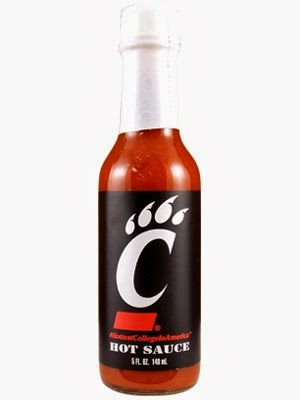
For fans of the University of Cincinnati, we now have Cincinnati Bearcats Hot Sauce, which is also officially licensed to bear the school's name, logo and colors. The bold black label is eye-catching and striking in its rarity -- very few hot sauces have a black label -- and the stylized C "pawprint" logo really stands out. Inside the bottle you'll find a tangy, tasty Louisiana-style hot sauce with straightforward aged cayenne pepper flavor and fire. This versatile, all-natural hot sauce adds just the right amount of food-friendly heat to wake up any savory dish, especially all the appetizers and snacks you like to enjoy while cheering for your favorite team.

And last but certainly not least, we're happy to announce Memphis Tigers Hot Sauce, brought to us with the official "blessing" of the University of Memphis. Like all our other collegiate hot sauces, this one is made with natural ingredients and gets its classic flavor and fire primarily from aged red cayenne peppers. Medium in heat with a pleasantly savory vinegar tang, you can enjoy this all-purpose hot sauce on pretty much anything and everything except dessert and sweets. From bloody Marys to Buffalo wings, burgers and fries to chips and dips, nachos and tacos to pizza and bratwurst, they'll all get a welcome wake-up call when you splash on some of this hot sauce. The school colors and pouncing tiger logo will proclaim your allegiance to the Tigers, too.

Our collegiate hot sauces are ideal for showing off team pride and school spirit. They make excellent graduation gifts as well as holiday stocking-stuffers and any-occasion gifts for students, faculty, staff, alumni and other fans. You can browse our entire selection of officially-licensed college & university hot sauces, all of which are currently on sale, when you click here.

Zestfully yours,
Gloria

Monday, February 24, 2014

Simple & Zesty Octopus Salad (2 Versions!)

Octopus salad
My octopus salad recipe is extremely easy and very flavorful, and you can give it Spanish/Latin American flair or a Greek-Mediterranean twist simply by changing a couple of the ingredients.

I use tinned octopus in olive oil, which is very popular in Spain, Cuba and the Mediterranean. You can find it in the same shelf area as sardines, anchovies, smoked oysters and other such canned seafood. If your regular grocery store doesn't carry canned octopus in olive oil, check any specialty-foods stores, Latino tiendas or Middle Eastern markets in your area if you have them.

Both versions of the following recipe make 2 to 4 servings depending on whether you serve the octopus salad "as is" with crackers or crostini or pita wedges, or as the topping to a mixed-greens or wilted spinach salad.

Ingredients
2 4-oz tins of octopus (pulpo in Spanish) in olive oil, undrained
1 large Roma tomato, diced
1/4 cup red onion, diced
2 to 3 mini sweet peppers*, diced
1/4 cup chopped fresh parsley
1/2 tsp dried oregano
Juice of half a lemon
Opt: 2 cloves roasted garlic, chopped
Salt & Pepper to taste

ensalada de pulpo
For the Spanish/Latin American version, add:
1/4 cup sliced pimiento-stuffed green olives or Spanish olives
2 Tbs diced roasted red peppers (called pimientos in Spanish)

For the Mediterranean version, add:
1/4 cup sliced Greek or Mediterranean olives or black olives
1/4 cup (or more to taste) crumbled feta cheese

*For a spicier salad, you can substitute a small hot chile for one of the sweet peppers, e.g., a red or green jalapeno pepper or a serrano pepper for the Spanish version or a peperoncini (pickled is fine) for the Mediterranean version. Unless you're a glutton for searing heat, however, I don't recommend using a habanero or other super-hot pepper because it can overpower the other flavors in the salad.

Place all ingredients in a bowl and stir gently until thoroughly combined. Serve as is for an appetizer with crackers, crostini or pita wedges, or over salad greens or lightly sauteed spinach.

Zestfully yours,
Gloria


Sunday, February 23, 2014

If You Want Carolina Sauce Coupons, Read This

Carolina Sauce Company coupons
Do you like barbecue sauce? How about hot sauce and spicy snacks?

Does zesty salsa float your boat? Do you crave great-tasting seasonings & better-than-supermarket condiments?

And what about saving money and getting a bargain?

Then you're in luck: We're having a VIP coupon sale at the Carolina Sauces online store!

If you're a member of our VIP Club, you received our February newsletter a few days ago with your special VIP coupon for an additional 5% off our already-reduced sale prices. In the newsletter you also got the scoop on our newest products, including all-natural southwestern-style salsas, a versatile Latin American 3-pepper vinegar pepper sauce, a delightful Italian tomato sauce with a touch of "fiesta" flavor, and cheesy-tangy-spicy potato chips.

Click to join our VIP Club
If you aren't a Carolina Sauce VIP, it's not too late to cash in on the exclusive coupon sale and try these zesty new products: Just sign up here for our VIP Club and you'll automatically receive a welcome coupon when you confirm your membership, and I'll personally send you a copy of our February newsletter!

Our VIP Club is completely FREE and you'll receive only one (1) email a month, which will be our monthly VIP newsletter containing a VIP-only discount coupon or other exclusive special available only to our VIPs. As a VIP you'll get our biggest, best discounts, available only to our VIP Club members. And should you ever wish to unsubscribe (although I really would hate to see you go), you can do so anytime quickly & easily and we honor all such requests without any further emails. For more information about the Carolina Sauce VIP Club and newsletter, click here.

Any questions? Need help signing up? Simply email me and I'll be more than happy to help.

Zestfully yours,
Gloria

PS: Our special limited-time, VIP-only coupon for February expires at the end of the month, but you can sign up anytime and you will automatically receive a valid welcome coupon as soon as you confirm your free VIP subscription.


Saturday, February 22, 2014

Pumpkin Soup with a Caribbean Twist

Pumpkin soup sopa de calabaza
The following soup recipe is based on traditional West Indian and Caribbean sopa de calabaza, or pumpkin soup, except that my version is vegan and vegetarian, while most traditional recipes call for chicken stock and heavy cream. My version therefore is lighter and healthier with a lower fat content. If you are not vegan or vegetarian, you can use chicken stock in place of the vegetable stock for a deeper, richer soup that's still not too heavy on the fat because there's no cream.

Calabaza, or West Indian pumpkin, is a winter squash with bright orange flesh and a hard, usually green and deeply ridged rind. The flesh or pulp is more dense and less sweet than that of American pumpkin. You can find calabaza either whole or cut into more manageable chunks at Latino, Caribbean, West Indian and other specialty or ethnic markets. You can sometimes find frozen calabaza puree in such stores, which will save you the work of cutting, peeling and cooking the squash. I highly recommend using calabaza for this soup if you can find it.

If true calabaza is not available in your area you can substitute Hubbard or kabocha squash. If you can't find either of those, then use American pumpkin as a last resort. Canned pumpkin puree can be used only if it is not "pumpkin pie filling," i.e., it must be 100% pure pumpkin puree without any other ingredients and definitely no sugar or other sweetener.

I've provided two cooking methods for my Caribbean pumpkin soup: One starts with whole or cut squash, and the other uses pureed squash.

Ingredients
1 1/2 to 2 lbs calabaza squash (West Indian pumpkin) or 1 lb puree
2 Tbs olive oil
Calabaza
Flickr photo by Julia Manzerova
2 large garlic cloves, minced
1/2 cup finely chopped onion
1 medium carrot, peeled & finely chopped
1 jalapeno or other hot pepper, seeded & finely chopped
2 bay leaves
1 tsp dried thyme
1 tsp dried oregano
1 tsp ground cinnamon
1 Tbs chopped fresh parsley (or 1 tsp dried)
5 cups vegetable stock (you can substitute chicken stock for non-vegetarian soup)
1/2 cup white wine (I recommend a Riesling or similar not-too-dry wine)
Salt & freshly ground pepper to taste

If using whole or cut squash: Peel the squash and cut into small cubes. Heat the oil in a large saucepan or soup pot over medium heat. Add the garlic, onion, carrot, hot pepper and bay leaves. Saute until the onion is just translucent. Stir in the squash cubes, thyme, oregano and cinnamon, then saute until the squash begins to soften. Add parsley, stock & wine, bring to a simmer and cook, uncovered and stirring occasionally, until the squash is fall-apart tender when pierced with a fork or pressed against the side of the pot with the back of a spoon. Puree the soup using a stick blender, taste for balance and season with salt & pepper to taste.

If using squash puree: Heat the oil in a large saucepan or soup pot over medium heat. Add the garlic, onion, carrot, hot pepper and bay leaves. Saute until the onion is translucent and the vegetables are tender. Add the remaining ingredients except the salt & pepper, stir to combine thoroughly, and bring to a simmer. Cook at a simmer, uncovered and stirring occasionally, for about 20 minutes or until the vegetables are fall-apart tender when pressed with the back of a spoon. Puree the soup using a stick blender, taste for balance and season with salt & pepper to taste.

Bufalo Chipotle Salsa Picante
If desired, sprinkle with a very light dusting of ground cinnamon or ground cayenne.

Makes 6 servings as a starter, or 4 hearty "meal size" servings.

Zestfully yours,
Gloria

PS: For an earthy, smoky variation of this recipe, use smoked pumpkin (you can cook calabaza, Hubbard or kabocha squash on your smoker using the same method as regular pumpkin), and instead of cayenne powder, use chipotle powder or even some chipotle hot sauce, such as Bufalo Chipotle Mexican Hot Sauce, but be careful not to make the soup too hot or overly spicy (start with just a little bit of chipotle and then add more to taste if desired).


Friday, February 21, 2014

Best-Selling Meats & Cheese at Carolina Sauce Co. for 2013

Chile Cheese Dip
Sure, our name might be Carolina Sauce Company, but we're not just another seller of zesty sauces and condiments: We also offer a delectable selection of unusual, hard-to-find and full-flavored meats and cheeses ranging from specialty bacon and spicy beef jerky to imported cheeses and peppery cheese dips. Here are our top-selling meat and cheese products for 2013:

1. Crazy Jerry's Hot 'n Chili Cheese Dip is a velvety blend of creamy cheeses with just enough fiery chili peppers, savory spices and ripe tomatoes to deliver a big, bold flavor that will have you coming back for more. Perfect for dipping all sorts of chips, crackers, pretzels, carrots, celery sticks or even bread cubes, you can also pour this hot and spicy restaurant-style chile cheese dip over nachos, burritos, tacos and even breakfast eggs, hash brown potatoes and sausage. Try it on hot dogs and hamburgers as a cheesy topping with a peppery kick!

Bone Suckin Jerky
2. Bone Suckin' Beef Jerky is a high-quality, all-natural, high-protein snack made from real American beef and boasting the flavors of one of America's most popular barbecue sauces, Bone Suckin' Sauce. A favorite among hikers, back-packers, athletes, students, and anyone looking for a healthy, satisfying snack that's lightweight, nutritious and full of rich flavor, the mouthwatering savory-sweet flavor of this beef jerky is incomparable. It's a great item to include in care packages, Christmas stockings and gift baskets, and to keep in your pantry or desk drawer for those times when you don't have time to prepare a midday meal or go out to lunch, or you just need a handy pick-me-up.

3. Bacon & Bacon Gifts: Through our wonderful partner Bacon Freak, we're thrilled to be able to offer a huge variety of bacon ranging from traditional cuts to gourmet, flavored, and nitrite-free bacon, plus a mind-boggling array of bacon gifts including bacon gift boxes, bacon bundles, bacon-themed novelties, bacon-scented cologne and toiletries, bacon t-shirts and other apparel, bacon cookbooks, and pretty much anything else bacon-y that you can imagine.

4. Blair's XXX Sudden Death Beef Jerky is for serious chileheads with a penchant for meat, and for adventurous carnivores who get a thrill out of fiery foods. Protein-rich dried beef is generously seasoned with super-hot peppers including red habaneros, cayennes and the ultra-hot Red Savina. But that's not all: savory herbs and spices add complementary "steakhouse rub" flavor for a deliciously devilish snack that will satisfy your taste buds as well as your craving for fiery heat.

Blair's Death Beef Jerky
5. Blair's Original Death Beef Jerky is similar in flavor to Sudden Death Beef Jerky, but not nearly as hot, which broadens its appeal and makes it more practical as a backpacking, camping or hiking snack when water and liquids might be at a premium. If you enjoy hot and spicy snacks and are ready to feel alive, treat yourself to a bag of this spicy, savory-sweet and protein-packed meaty snack. One bite and you'll wish you had gotten more -- so plan ahead and order several bags while they're on sale at the Carolina Sauces online store!

Zestfully yours,
Gloria


Thursday, February 20, 2014

Greg's Spicy BBQ Bacon Cabbage

spicy barbecue bacon cabbage
Anyone who thinks that thin, tangy vinegar barbecue sauce from North Carolina is only good for pulled pork, aka Carolina pork BBQ, is sadly mistaken and missing out on some mighty good eats.

And I not referring to using NC vinegar barbeque sauce as a marinade for chicken or a seasoning for collard greens, although those are perfectly fine ways to use the sauce.

No, I'm talking about the following recipe created by Greg on the fly, when we had too much cabbage on hand and no desire to make or eat slaw. Although he usually just "eyeballs" the quantities and throws everything together without measuring, I finally was able to persuade him to weigh the cabbage, count the bacon strips and pour the BBQ sauce into a measuring cup so that I could post his recipe for spicy BBQ Bacon Cabbage here. Feel free to adjust the ingredient quantities to suit your taste and preferred spiciness. Sometimes Greg adds one or more of the optional ingredients, depending on what we have in the refrigerator. But the basic recipe is more than good enough without any of them.

Ingredients
1 large cabbage, approx. 2 lbs
5 strips bacon, chopped into 1" pieces
2/3 cup vinegar-based NC barbecue sauce*
Optional: A little (1 Tbs to 1/4 cup) finely chopped onion
Optional: 1 small hot pepper or 1 Tbs to 1/4 cup chopped sweet/bell pepper
Optional: Freshly ground black pepper to taste

cabbage with NC BBQ sauce & bacon
*Use either an eastern NC vinegar BBQ sauce like Wells Hog Heaven, or a thin vinegar & tomato Piedmont/Lexington (western NC) barbecue sauce like the original Bone Suckin' Sauce or Jim's Own Homestyle or Hot Bar-B-Q Sauce. You don't want to use a thick tomato-based barbecue sauce in this recipe because it's too sweet and doesn't have enough vinegar, and is likely to scorch (plus it won't taste right). The less tomato in the NC BBQ sauce, the better for this recipe.

Cut the cabbage into quarters, remove & discard core and then slice the cabbage into thin strips. Cook the chopped bacon in a pot large enough to hold all the sliced cabbage. When bacon is fully cooked, add the sliced cabbage (and onion and/or peppers if using) to the pot and stir to combine. Yes, you'll be cooking in the bacon grease -- I never claimed that this recipe would be low in fat. Once the cabbage is nicely coated with the bacon grease, stir in the barbecue sauce. Cook over medium heat, stirring from time to time, until cabbage is tender. Taste for balance and add a little more BBQ sauce if you want a more tangy flavor, or black pepper if you want a spicier heat. Serve hot, and refrigerate any leftovers (they're tasty either reheated or cold from the fridge). Makes about 6 servings, or fewer if you can't stop eating it.

Zestfully yours,
Gloria