Winter usually ushers in cold & flu season, which means sore throats and coughs. Here is a very soothing, natural and sublimely delicious way to ease the discomfort of a sore throat and possibly help with other symptoms (it's packed with Vitamin C, and honey is also highly regarded for its medicinal properties). The original recipe is here, and the author says it's an old, traditional Korean recipe. The article was recommended to me by a fellow singer, and for me this lemon-honey "jam" and the hot lemonade I make from it has brought much relief to my tired voice during this busy holiday season. I've also managed to avoid getting sick -- coincidence? Perhaps...
This sweet-tart treat is quite easy to make and enchantingly delicious whether enjoyed "straight" steeped in hot water as hot lemonade, or spooned into hot tea or herbal tea. You can even eat it straight from the jar, or make a hot toddy by adding hot water and a splash of dark rum, bourbon, whiskey or other liquor to the hot lemonade.
All you need are clean Mason jars (1/2 pint or full pint), fresh lemons and RAW honey -- do not use honey that has been pasteurized, filtered or otherwise processed. I prefer to use organic lemons so that there is no pesticide residue, wax or other "pollutant" on the rind. I also recommend making more than 1 jar at a time so that you can let one "age" longer while you enjoy the first jar. According to the original article, this lemon-honey "jam" is shelf-stable and won't spoil at room temperature even after opening, and it can last for years if refrigerated.
Wash and dry the lemons, then cut into very thin slices, as thin as you can -- for 1/2 pint jars, I cut the lemon in half crosswise and then cut each half lengthwise to make half-moon slices. If you have very large lemons, you can cut again into wedges and then slices. As you slice the lemons, remove and discard all seeds.
Fill each jar with the lemon slices -- this may take anywhere from 1 to 2 full lemons per half-pint jar, depending on how large they are. If you end up with leftover slices, save them for cooking or for adding to drinks.
Carefully pour raw honey over the lemon slices until the jar is no more than half-full of honey. The honey will begin releasing the juices and essential oils from the lemons, and the honey-lemon liquid will eventually finish filling the jar. Don't make the mistake I did once and fill the jar with honey, because this will cause the liquid to leak out as the lemons break down in the honey.
Tightly close each jar and store either in your pantry or in the refrigerator and wait at least 24 hours before opening to let the juice and oils seep from the lemons. If you store your "jam" in the refrigerator, this process will
take longer, so I always leave at least 1 jar at room temperature so
that it's ready to enjoy in a few days. The more days you wait, the "stronger" and more jam-like the concoction will be, because the honey will have had more time to break down the lemons and extract their juices and oils. The color will also darken slightly, and according to the article the "jam" eventually will begin to ferment. I've always finished a jar before it got to that point, but supposedly it will still be safe to eat, and might have even more "healing" properties from the fermentation.
To make hot lemonade, spoon out as much as you'd like of the lemon-honey jam into a mug and fill with boiling water -- I use at least a couple of tablespoons for a large mug, and "mash" the lemons as I add the water. I sometimes also like to add a cinnamon stick for additional flavor. Cover and let seep for 10 minutes, then sip and enjoy the relief it brings to your sore throat or overworked vocal folds. The honey can also help calm a cough. After I've drunk all the hot lemonade, I eat the mashed lemons, rinds and all (that's another reason to use organic lemons). The rinds become sweeter over time as they absorb more honey. In fact, after a few weeks I find myself eating the "jam" straight from the jar!
If you drink tea or herbal tea, add a spoonful or two of this jam instead of using sugar or plain lemon. And as mentioned before, the hot lemonade can be the base of a warming hot beverage for adults by adding some booze.
I hope this ancient, natural "home remedy" brings you comfort the next time your throat hurts, your voice is tired, you feel under the weather, or you just want to enjoy a warm, soothing beverage.
Zestfully yours,
Gloria
Thursday, December 13, 2012
Monday, December 10, 2012
Send a Taste of NC with these BBQ Sauce Gifts
![]() |
| NC BBQ Sauces Mild Gift Set |
Each gift set comes with four full-size NC products selected for their authenticity and popularity, and each set is priced at a discount off what you would pay if you purchased the products separately.
First, there's the NC BBQ Sauces Gift Set, which comes with three different sauces representing the three different styles of barbecue sauce found in Carolina and a bottle of BBQ dry rub:
- Wells Hog Heaven, a traditional eastern NC barbecue sauce made with vinegar and spices, and absolutely NO tomatoes. True to its eastern roots -- it's made in the tiny town of Burgaw just outside Wilmington -- Wells is ideal for splashing on smoked pulled pork. But don't limit it to just that: Try it as a marinade for chicken, or splashed on collard greens or even on fried catfish as an alternative to pepper vinegar.
- Bone Suckin' Sauce is probably North Carolina's best-known BBQ sauce. Made in the western style, it blends tomato into the vinegar for a sweeter, mellower taste and for greater versatility than a vinegar-only sauce. Some folks even use it for mopping on ribs, and it is excellent for grilling chicken, veggies, shrimp, pork chops & more.
- Representing the mustard sauces found in the southern coastal part of the state (and also in South Carolina), JohnBoy & Billy's Grillin' Sauce is the thickest of the bunch, making it the best for ribs and other slathering applications. But it's also great with pulled or chopped pork barbecue when you're craving a tangy-sweet-savory sauce with sassy mustard flavor.
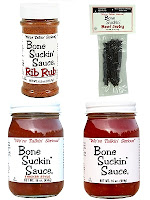
- A bottle of the original Bone Suckin' Rib Rub rounds out this gift set. Whether you rub it on a Boston butt (pork shoulder), ribs, chicken or chops, or mix it into raw ground meat for burgers or meatloaf, or sprinkle it on veggies or French fries, it adds wonderful savory-sweet barbecue flavor to everything you use it on.
![]() |
| NC BBQ Sauces Hot Gift Set |
![]() |
| Bone Suckin' Mild Gift Set |
The Bone Suckin' MILD Gift Set includes full-size jars of the Original and the Thicker versions of Bone Suckin' Sauce, a bottle of the original Bone Suckin' Rib Rub, and a package of one of their newest items, Bone Suckin' Beef Jerky -- yes, that's genuine, all-natural US beef that's been seasoned with Bone Suckin' Sauce and expertly dehydrated for the right amount of chewiness and plenty of mouthwatering flavor. This Gift Set is Gluten-Free, in case that's a consideration.
![]() |
| Bone Suckin' HOT Gift Set |
Send a taste of Carolina with one of the above barbecue sauce gift sets from the Carolina Sauce Company, and you'll make someone's day.
Zestfully yours,
Gloria
PS: If you need a gift for a hot sauce fanatic, make sure to browse through our newly-expanded selection of Gift Sets & Gift Boxes where you'll find dozens of new hot sauce gifts, including samplers of brands like Blair's Death, Dave's Gourmet and Matouk's, plus new themed gift sets covering topics like zombies, Elvis, and even Cheech Marin.
Saturday, December 8, 2012
Happy Hanukkah from the Carolina Sauce Company!
![]() |
| Original Flickr photo by skpy |
Chag Chanukah Sameach!
Zestfully yours,
Gloria
Friday, December 7, 2012
Dilly Turnip Latkes
Hanukkah begins tomorrow Saturday at sundown. Many Jews, and even some non-Jews like me, enjoy traditional foods like latkes to celebrate the 8-day Festival of Lights.
My latkes, however, are not your Jewish Grandmother's latkes--unless, of course, your Grandma didn't mind breaking with tradition and using something other than potatoes when making latkes for Hanukkah.
My turnip latkes can be tricky to flip during frying if you make them too big, so I recommend making lots of little latkes using no more than tablespoon of the mixture, instead of the traditional larger-size pancakes. Another way to make them easier to flip as well as fluffier in texture is to place the shredded turnips together with the remaining ingredients (except the frying oil, of course) in a food processor and process until smooth, to make a pourable "batter." But if you prefer old-fashioned texture, stick with the shredded turnips and use some TLC when turning in the frying pan--and you can add a couple of tablespoons of fine breadcrumbs or matzoh meal to the mixture to help them stay together during frying and flipping.
The smaller and younger the turnips you use, the sweeter and milder the flavor. Older, larger turnips can have a sharp or bitter tang that kids and more sensitive palates might not appreciate.
Turnip latkes are equally delicious with applesauce (apples and turnips are a natural pairing) or with sour cream.
Ingredients
1 lb turnips, washed, trimmed & peeled
3 to 4 cloves garlic, minced
1/3 cup finely chopped onion
2 Tbs finely chopped red bell pepper or sweet mini-peppers
2 eggs
1 1/2 tsp dried dillweed OR 1 heaping Tbs fresh chopped dill
1/2 tsp Kosher salt
1/4 tsp ground black pepper
Oil for frying (vegetable or canola)
Shred the turnips into a large bowl, then add remaining ingredients EXCEPT oil and mix well to thoroughly combine.
Pour oil about 1/4" deep in a large frying pan and heat over medium flame. Test the oil by adding a tiny bit of butter: If it sizzles when it hits the oil, it's hot enough. Drop the turnip mixture into the hot oil with a tablespoon, using the back of the spoon to flatten and making sure you leave space between the latkes (you will need to fry in batches). Fry until set and the edges turn golden--this takes several minutes and I like to cover the pan to help them set faster.
Carefully flip the latkes over to fry on other side for a few minutes until golden. Use a slotted spoon to transfer onto paper towels to drain--you can keep hot in a warm (200°F) oven until all the latkes are fried. Serve hot with apple sauce and/or sour cream. Makes about two dozen small latkes or about 15 regular-size ones.
Do you have a favorite Hanukkah recipe? Please share in a comment below.
Zestfully yours,
Gloria
PS: If you really don't mind straying from tradition, these dilly turnip latkes pair very nicely with an apple-based hot sauce like Tahiti Joe's Maui Pepper Co. Apples Ass Hot Sauce.
My latkes, however, are not your Jewish Grandmother's latkes--unless, of course, your Grandma didn't mind breaking with tradition and using something other than potatoes when making latkes for Hanukkah.
My turnip latkes can be tricky to flip during frying if you make them too big, so I recommend making lots of little latkes using no more than tablespoon of the mixture, instead of the traditional larger-size pancakes. Another way to make them easier to flip as well as fluffier in texture is to place the shredded turnips together with the remaining ingredients (except the frying oil, of course) in a food processor and process until smooth, to make a pourable "batter." But if you prefer old-fashioned texture, stick with the shredded turnips and use some TLC when turning in the frying pan--and you can add a couple of tablespoons of fine breadcrumbs or matzoh meal to the mixture to help them stay together during frying and flipping.
The smaller and younger the turnips you use, the sweeter and milder the flavor. Older, larger turnips can have a sharp or bitter tang that kids and more sensitive palates might not appreciate.
Turnip latkes are equally delicious with applesauce (apples and turnips are a natural pairing) or with sour cream.
Ingredients
| Shredded turnip mixture |
3 to 4 cloves garlic, minced
1/3 cup finely chopped onion
2 Tbs finely chopped red bell pepper or sweet mini-peppers
2 eggs
1 1/2 tsp dried dillweed OR 1 heaping Tbs fresh chopped dill
1/2 tsp Kosher salt
1/4 tsp ground black pepper
Oil for frying (vegetable or canola)
Shred the turnips into a large bowl, then add remaining ingredients EXCEPT oil and mix well to thoroughly combine.
Carefully flip the latkes over to fry on other side for a few minutes until golden. Use a slotted spoon to transfer onto paper towels to drain--you can keep hot in a warm (200°F) oven until all the latkes are fried. Serve hot with apple sauce and/or sour cream. Makes about two dozen small latkes or about 15 regular-size ones.
Zestfully yours,
Gloria
PS: If you really don't mind straying from tradition, these dilly turnip latkes pair very nicely with an apple-based hot sauce like Tahiti Joe's Maui Pepper Co. Apples Ass Hot Sauce.
Thursday, December 6, 2012
Who wants a 10% VIP Coupon for Carolina Sauces?
![]() |
| NC BBQ Sauce Gift Set, Mild |
If you've signed up for our FREE monthly newsletter, then you should have received your VIP coupon this morning with the December issue.
If you don't currently receive our free newsletter, I'll send you a complimentary copy with your 10% VIP coupon -- all you need to do is send me an email that says "VIP Coupon" and I'll reply back with your coupon and newsletter, which also includes a recipe for BLT Soup and information on our newest Hot Sauce & BBQ Sauce Gift Sets. I'll also set you up as a Carolina Sauce VIP so that you'll receive our exclusive monthly discount and newsletter (you can unsubscribe anytime of course, and it's always 100% free).
Don't delay: This VIP coupon will expire on Christmas Day, so email me today (sales@carolinasauce.com) or PM me on the Carolina Sauce Company Facebook Page for your coupon!
Zestfully yours,
Gloria
Wednesday, December 5, 2012
Tennessee Whiskey Sauces & Seasonings
![]() |
| Tennessee Whiskey Swineapple Rib Glaze |
Praised for their satisfyingly big, bold flavors and rich texture, Tennessee Whiskey sauces are made with a splash of real Jack Daniels Whiskey for deep layers of complex flavors including hints of caramel, oak and dark, earthy smoke.
Here's a quick description each type of sauce and seasoning available, along with "hot links" so that you can simply click on the product name to get additional information and to order online:
Tennessee Whiskey Swineapple Rib Glaze & Dippin' Sauce is a brilliant concoction made from Burgundy wine, apple juice, pineapple and Jack Daniels Black Label Whiskey all blended into a sweet and tangy, thick and rich tomato base for what can only be described as outrageously delicious, lip-smackin' and finger-lickin' flavor. It's just mildly spicy, not hot, making it perfect for virtually the whole family. Luscious as a glaze for ribs (pork or beef), chicken and ham, it's also great for basting kabobs and dipping at the table.
Lynchburg Tennessee Whiskey Jack in the Bean Sauce is mild, not hot or spicy (hence, the label says "no poof" as in no flash point), but it's packed with real tomato flavor and that special balance of sweetness and tang that complements all sorts of hearty grilled foods, from ribs and chops to chicken and kabobs. If you're watching your sugar intake and counting carbs, you'll be pleased to learn that Jack in the Bean BBQ Sauce uses sucralose to replace some of the sugar and other sweeteners used in the original recipe.
Tennessee Whiskey Sweet & Mild Jack Daniels 86 Proof BBQ Sauce: The "proof," or "poof" if you want to match what's on the label, refers to the heat level of this sweet and sassy barbecue sauce, and not the amount of alcohol (although it does use a little bit of Jack Daniels Black Label Sour Mash Whiskey for the sake of flavor). The same mouthwatering flavor found in Jack in the Bean Sauce is spiced up with just enough hot peppers to take the heat level to the milder side of medium, which means you'll be able to enjoy this sauce on everything you grill without burning out your mouth.
Tennessee Whiskey Jack Daniels 100 Proof Hot & Spicy BBQ Sauce won't get you drunk -- the 100 proof (more accurately, the "Poof," as in flash point) is how the folks in Lynchburg rate the heat level of this hot barbecue sauce. A special blend of hot chili peppers are mixed into the original sweet-tangy tomato BBQ sauce recipe, along with some Black Label Sour Mash Whiskey, to deliver a burn that's on the hotter side of medium and will satisfy most spicy-foods lovers.
![]() |
| TN Whiskey Jalapeno Hot Sauce |
Tennessee Whiskey Jalapeno Hot Sauce takes traditional vinegar-pepper hot sauces to a whole new level by adding a splash of real Jack Daniels whiskey. Not only does this enhance the natural flavor and fire of the jalapenos and cayennes used in this hot sauce, but it also adds hints of oaky, caramel notes that help to mellow the vinegar's edges without softening the medium heat. This all-purpose hot sauce will satisfy adult palates that understand the importance of good taste.
Tennessee Whiskey Habanero Hot Sauce blends fiery habanero peppers and feisty cayennes in a traditional vinegar base that's enhanced by real Jack Daniels Black Label Whiskey for a distinctive taste that will bring a smile to a whiskey-lover's face. Packing a solid hot burn, it's an excellent all-purpose choice when you've outgrown boring supermarket hot sauce brands and are ready to enjoy the finer things in life. And it comes in a 6oz bottle (as opposed to the typical 5oz hot sauce size), which means you get more sauce for your dollar.
![]() |
| TN Whiskey Steak & Burger Rub |
Tennessee Whiskey BBQ Seasoning & Rub is savory-sweet with a sassy, peppery kick that's pleasant and not painful. I don't know how they do it, but they actually make this rub using a little Jack Daniels Black Label Whiskey. This BBQ rub is an excellent choice for all sorts of red meats including steaks, ribs, roasts, chops and tenderloin--and it's wonderful on game like venison, pheasant, duck, goose & more. It also enhances chicken and the more flavorful varieties of seafood including tuna steaks, salmon and shrimp. And it's not half-bad on veggie burgers or grilled mushrooms, roasted potatoes and other vegetables!
Tennessee Whiskey "Diabetic Friendly" Deli & Grillin' Sauce is called diabetic-friendly because it replaces some of the sugar in the original barbecue sauce recipes with sucralose (also known by the brand name Splenda®). If you're watching your sugar intake or counting your carbs but still crave the tangy-sweet flavors of a good tomato barbecue & grilling sauce that can also substitute for ketchup, this is the answer for you. It's very mild in terms of heat so it won't burn anyone's tongue. And it's so versatile you can use it on burgers and hot dogs, in chili and meatloaf, or as a grilling and dipping sauce for meats, poultry, seafood & veggies.
All of these sauces are currently on sale if you shop online at Carolina Sauces.
Zestfully yours,
Gloria
Labels:
barbeque sauce,
hot sauce,
new products,
Rubs/Seasonings
Tuesday, December 4, 2012
Crock Pot Split Pea & Ham Soup
Split pea and ham soup has been a cold-weather favorite of mine since childhood. Luckily, it is very easy to make in a crock pot or slow-cooker, and virtually foolproof. Once you taste homemade split pea & ham soup and inhale the rich aroma as it cooks, you will never go back to the canned version again.
The following recipe is my adaptation of this recipe found on about.com, and serves 6 to 8. Although most traditional recipes call for more celery, I make my soup with relatively little celery because Greg hates celery. The first time I made this soup I added 1 teaspoon of salt, which is much less than the original recipe but still tasted too salty, no doubt because of the saltiness of the ham hock. So, I no longer add any salt unless the soup needs it after I've tasted the finished product. My recipe is also zestier than the original, but without being spicy or hot. If you'd like to add a little kick, I recommend a splash or more of an uncomplicated vinegar-pepper hot sauce such as Texas Pete, Tabasco or even Busha Browne's Pukka Sauce. You can freeze this soup without any loss of flavor or texture.
Ingredients
1 lb (about 2 1/2 cups) dried green split peas, rinsed and picked over
1 meaty country ham hock (approx. 1 lb.)
4 carrots, peeled and sliced (approx. 1 1/3 cups or 10oz)
1 medium onion, chopped (approx. 1 cup)
1 small celery rib, chopped (approx. 1/2 cup)
4 cloves garlic, minced
2 bay leaves
2 tsp. dried parsley
1/2 tsp ground black pepper
1/4 tsp dried marjoram
1/4 tsp dried thyme
1/4 tsp crushed red pepper flakes
1 quart chicken stock (I make my own) plus 3 cups water, combined
Layer the ingredients in your crock pot in the order given and do not stir.
Cover and cook on high for 5 to 6 hours OR on low for 10 to 12 hours. Alternatively, to reduce cooking time, heat the stock & water to just below a simmer and add while hot - if you do it that way, the soup should cook in 4 to 5 hours on high OR 8 to 10 hours on low.
Before serving, remove bay leaves and discard. Also remove the ham hock, cut the meat off the bone and chop into small pieces, then stir the ham into the soup and discard the bone. If you prefer to puree the soup, I recommend using a hand-held immersion blender (aka stick blender) after you remove the bay leaves and ham hock, and preferably before adding the ham pieces back into the soup (they can get stuck in the blender blades). Ladle into bowls and serve with rolls or other bread and a tossed salad for a wholesome and satisfying winter meal.
Zestfully yours,
Gloria
PS: This recipe is the answer to our December Crock Pot Game. We play a new Crock Pot Game on the first of each month on the Carolina Sauce Facebook Page, and the winner gets a prize pack of sauces & seasonings. Be sure to like us on Facebook for your chance to win FREE sauce when we play the next game, on New Year's Day!
The following recipe is my adaptation of this recipe found on about.com, and serves 6 to 8. Although most traditional recipes call for more celery, I make my soup with relatively little celery because Greg hates celery. The first time I made this soup I added 1 teaspoon of salt, which is much less than the original recipe but still tasted too salty, no doubt because of the saltiness of the ham hock. So, I no longer add any salt unless the soup needs it after I've tasted the finished product. My recipe is also zestier than the original, but without being spicy or hot. If you'd like to add a little kick, I recommend a splash or more of an uncomplicated vinegar-pepper hot sauce such as Texas Pete, Tabasco or even Busha Browne's Pukka Sauce. You can freeze this soup without any loss of flavor or texture.
Ingredients
1 lb (about 2 1/2 cups) dried green split peas, rinsed and picked over
1 meaty country ham hock (approx. 1 lb.)
4 carrots, peeled and sliced (approx. 1 1/3 cups or 10oz)
1 medium onion, chopped (approx. 1 cup)
1 small celery rib, chopped (approx. 1/2 cup)
4 cloves garlic, minced
2 bay leaves
2 tsp. dried parsley
1/2 tsp ground black pepper
1/4 tsp dried marjoram
1/4 tsp dried thyme
1/4 tsp crushed red pepper flakes
1 quart chicken stock (I make my own) plus 3 cups water, combined
Layer the ingredients in your crock pot in the order given and do not stir.
| After about 1 hour on high |
Cover and cook on high for 5 to 6 hours OR on low for 10 to 12 hours. Alternatively, to reduce cooking time, heat the stock & water to just below a simmer and add while hot - if you do it that way, the soup should cook in 4 to 5 hours on high OR 8 to 10 hours on low.
| Almost done |
| Pureed & ready to serve |
Zestfully yours,
Gloria
PS: This recipe is the answer to our December Crock Pot Game. We play a new Crock Pot Game on the first of each month on the Carolina Sauce Facebook Page, and the winner gets a prize pack of sauces & seasonings. Be sure to like us on Facebook for your chance to win FREE sauce when we play the next game, on New Year's Day!
Monday, December 3, 2012
How to Make Genuine NC Pulled Pork BBQ
Making genuine North Carolina pulled pork barbecue is a dying art. Even if they know how to do it, few people nowadays take the time, or have the time, to tend to a smoker or BBQ pit -- and sadly, few barbecue restaurants actually smoke their pork anymore, either because of the time and labor involved or because of local ordinances effectively banning commercial BBQ pits.
While smoking a whole hog is indeed a huge production, smoking a pork shoulder or butt (aka Boston butt) is certainly doable for most people and well worth the time and effort. If you've always wanted to make real North Carolina barbecue that's fork-tender and succulent with a seductive smokiness that complements the natural meaty flavors in the pork, read on.
First, the good news: It's actually not hard to make perfectly edible and even tasty NC barbeque that's smoked, not baked or slow-cooked in a crock pot. The "bad" news is that it takes practice to achieve that blissful balance of spice, smoke, crunchy bark, juicily tender flesh and the pink halo of a smoke ring. But there are worse ways to spend your time than making and eating barbecue.
As with baking, variables like the weather (temperature and humidity) need to be taken into account when using a smoker, and wind can also be a factor, hence the need for practice. Greg has spent years honing his barbecue-making skills and practicing the art of turning a pork butt into real North Carolina BBQ. Here is his tried-and-true method, which has won him many friends, earned him the respect and envy of pros, and even seduced vegetarians into sneaking a bite and proclaiming it GOOD.
To make authentic pulled pork barbecue, you'll need a smoker with a temperature gauge built in (or a separate smoker thermometer), one or two chimney-style charcoal starters (to make life easier), real charcoal (not "quick start" because you don't want any fuel flavor), wood chips or chunks (Greg recommends oak because mesquite and hickory are too strong while fruit woods are too mild), and a Boston butt, aka pork butt. Unless you are very experienced, you should also use a meat thermometer to ensure that the pork reaches an internal temperature of 180°F.
Fill two charcoal chimneys with charcoal and light the coals (Greg uses crumpled newspaper as fuel). When the coals are red, dump them into the smoker and add a few chunks of oak (or a couple of handfuls of chips) to your smoker. Burn until the wood burns down to coals and no flame is present. Adjust the smoker vents so that the temperature gauge hits and maintains at 250°F. This is where science and art intersect, because you likely will need to monitor and adjust the vents from time to time to maintain the correct temperature for the entire cooking time. And there is no set amount of cooking time: As Greg likes to say, "it's done when it's done." There is no rushing good barbecue, and depending on the size of the pork butt and outdoor conditions (temperature, wind & humidity), it may take a few hours or all day--or even overnight and through the next day if you are smoking a whole hog in the middle of winter. But if you insist on additional information, when Greg made barbecue this weekend he used a 2 1/2 lb. very lean pork butt from a local farm (conventionally-raised pork will be fattier), and it took about 6 hours to smoke.
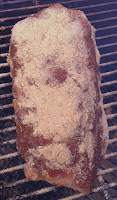
While the wood is burning down, completely rub the Boston butt with your choice of BBQ rub or seasoning, covering it liberally. Once the smoker hits 250°F, place the butt on the smoker rack, fat
side down. Some people place it fat side up, but Greg swears there's really no discernible difference in taste and you don't really need the fat dripping down into the meat if you know what you're doing.
Once the butt is on the smoker, leave it alone BUT periodically check the temperature of the smoker to make sure it remains at 250°F. Depending on whether the temperature fluctuates up or down before the butt is done, you may need to adjust the vents and/or add a little more charcoal (make sure you light it first and wait until the coals are glowing before adding to the smoker, or else you'll introduce unpleasantly harsh flavors).
The pork butt is done when you can stick a metal fork in it and twist without much effort BUT the meat is not falling apart. When the pork is fork-tender the internal temperature of the pork will have hit 180°F. When the butt looks like the photo below, you can test for doneness:
"Fork-tender" is before "fall off the bone" tender, with the latter being overcooked and probably dry. The photo below shows Greg using the fork test to determine that the pork is done and ready to be removed from the smoker:
When it's done, transfer the butt onto a platter or tray and let it rest 15 minutes. You can see where Greg used the fork test:
After the pork has rested, use two forks or your hands to pull the pork. Greg likes to use two forks:
At this point, you can either transfer the pork into a bowl or pan for saucing, or serve it "unsauced" on plates or buns with a bottle of genuine North Carolina barbecue sauce handy so that diners can add sauce to add to taste. Good side dishes to serve include slaw and hush puppies, as well as collards or other greens, baked beans or seasoned green beans.
Zestfully yours,
Gloria
PS: If you're looking for real North Carolina BBQ sauce for your pulled pork barbecue, you'll find some of the best on our NC Products page, including eastern-style (vinegar) Wells Hog Heaven BBQ Sauce, spicy-hot eastern style Scott's BBQ Sauce, Piedmont or Lexington style (vinegar-tomato) Jim's Own BBQ Sauce, and western-style (more tomato plus vinegar) Bone Suckin' Sauce.
While smoking a whole hog is indeed a huge production, smoking a pork shoulder or butt (aka Boston butt) is certainly doable for most people and well worth the time and effort. If you've always wanted to make real North Carolina barbecue that's fork-tender and succulent with a seductive smokiness that complements the natural meaty flavors in the pork, read on.
First, the good news: It's actually not hard to make perfectly edible and even tasty NC barbeque that's smoked, not baked or slow-cooked in a crock pot. The "bad" news is that it takes practice to achieve that blissful balance of spice, smoke, crunchy bark, juicily tender flesh and the pink halo of a smoke ring. But there are worse ways to spend your time than making and eating barbecue.
As with baking, variables like the weather (temperature and humidity) need to be taken into account when using a smoker, and wind can also be a factor, hence the need for practice. Greg has spent years honing his barbecue-making skills and practicing the art of turning a pork butt into real North Carolina BBQ. Here is his tried-and-true method, which has won him many friends, earned him the respect and envy of pros, and even seduced vegetarians into sneaking a bite and proclaiming it GOOD.
| Chimney Charcoal Starter |
Fill two charcoal chimneys with charcoal and light the coals (Greg uses crumpled newspaper as fuel). When the coals are red, dump them into the smoker and add a few chunks of oak (or a couple of handfuls of chips) to your smoker. Burn until the wood burns down to coals and no flame is present. Adjust the smoker vents so that the temperature gauge hits and maintains at 250°F. This is where science and art intersect, because you likely will need to monitor and adjust the vents from time to time to maintain the correct temperature for the entire cooking time. And there is no set amount of cooking time: As Greg likes to say, "it's done when it's done." There is no rushing good barbecue, and depending on the size of the pork butt and outdoor conditions (temperature, wind & humidity), it may take a few hours or all day--or even overnight and through the next day if you are smoking a whole hog in the middle of winter. But if you insist on additional information, when Greg made barbecue this weekend he used a 2 1/2 lb. very lean pork butt from a local farm (conventionally-raised pork will be fattier), and it took about 6 hours to smoke.
| Rubbed & on the smoker |
Once the butt is on the smoker, leave it alone BUT periodically check the temperature of the smoker to make sure it remains at 250°F. Depending on whether the temperature fluctuates up or down before the butt is done, you may need to adjust the vents and/or add a little more charcoal (make sure you light it first and wait until the coals are glowing before adding to the smoker, or else you'll introduce unpleasantly harsh flavors).
"Fork-tender" is before "fall off the bone" tender, with the latter being overcooked and probably dry. The photo below shows Greg using the fork test to determine that the pork is done and ready to be removed from the smoker:
When it's done, transfer the butt onto a platter or tray and let it rest 15 minutes. You can see where Greg used the fork test:
| Smoked Boston butt resting before pulling |
At this point, you can either transfer the pork into a bowl or pan for saucing, or serve it "unsauced" on plates or buns with a bottle of genuine North Carolina barbecue sauce handy so that diners can add sauce to add to taste. Good side dishes to serve include slaw and hush puppies, as well as collards or other greens, baked beans or seasoned green beans.
Zestfully yours,
Gloria
PS: If you're looking for real North Carolina BBQ sauce for your pulled pork barbecue, you'll find some of the best on our NC Products page, including eastern-style (vinegar) Wells Hog Heaven BBQ Sauce, spicy-hot eastern style Scott's BBQ Sauce, Piedmont or Lexington style (vinegar-tomato) Jim's Own BBQ Sauce, and western-style (more tomato plus vinegar) Bone Suckin' Sauce.
Sunday, December 2, 2012
November's Top 10 Best-Selling Products at Carolina Sauce
![]() |
| Busha Browne's Pukka Sauce |
1. Wells Hog Heaven BBQ Sauce: This eastern North Carolina vinegar barbecue sauce from the little town of Burgaw, NC, is the real deal, and is also our all-time best selling sauce. There are no tomatoes or other thickeners in it because it's made for splashing on pulled (or chopped) pork BBQ, the kind that's slow-smoked for hours and served with some slaw and hush puppies. Wells is also good as a marinade, especially for chicken.
2. Busha Browne's Pukka Sauce: This is a classic colonial-style hot sauce from Jamaica, and is not based on jerk spices. Instead, fiery scotch bonnet peppers take the starring role in this all-purpose vinegar hot sauce, both in terms of flavor and heat. When you're looking for an honest, savory, solidly hot but not overwhelming hot sauce to use at the table or in recipes, you won't go wrong with Pukka Hot Sauce.
3. Matouk's Calypso Sauce: This bright, fiery-hot sauce from Trinidad & Tobago boasts authentic West Indian flavor with its mustard base and aged scotch bonnet peppers. The subtle hint of sweetness takes the harsh edge off the vinegar without turning Calypso into a "sweet" hot sauce. And the thick, rich body makes Matouk's Calypso excellent for slathering on grilled food, burgers, sandwiches and more.
![]() |
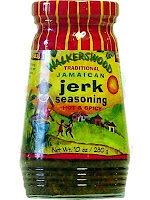
| Walkerswood Jerk |
5. Matouk's Flambeau Sauce: This is by far the HOTTEST of the Matouk's family of hot sauces, which should come as no surprise since its main ingredient is pepper mash made from aged, pickled select scotch bonnet peppers. Supremely fiery and yet devilishly delicious, Matouk's Flambeau is preferred by serious chileheads and fiery-foods fanatics who want intense heat without the "off" flavors of extract-enhanced hot sauces.
![]() |
| Scorned Woman Hot Sauce |
7. Matouk's West Indian Hot Sauce: Similar to Calypso but a little less intense on the heat level and with a pleasant sweetness from tropical papaya, Matouk's West Indian Salsa Picante is the kind of hot sauce that will make even the most jaded critic smile. Fabulous on fish, perfect on poultry, and magnificent on pork and other meats.
![]() |
| Bad Byron's Butt Rub |
9. Johnston County Country Hams: These world-famous, award-winning country hams are cured in the traditional manner in Smithfield, North Carolina, for that unmistakable smoky-salty succulence that harkens back to olden days. Whether you serve it with red-eye gravy and grits or on a buttery biscuit, this Southern delicacy is a great way to start your day. Country ham is also wonderful for adding flavor and richness to soups, stews and casseroles, and in sandwiches, too.
| Jalapeno Poppers Grill Roaster |
Zestfully yours,
Gloria
Subscribe to:
Posts (Atom)